
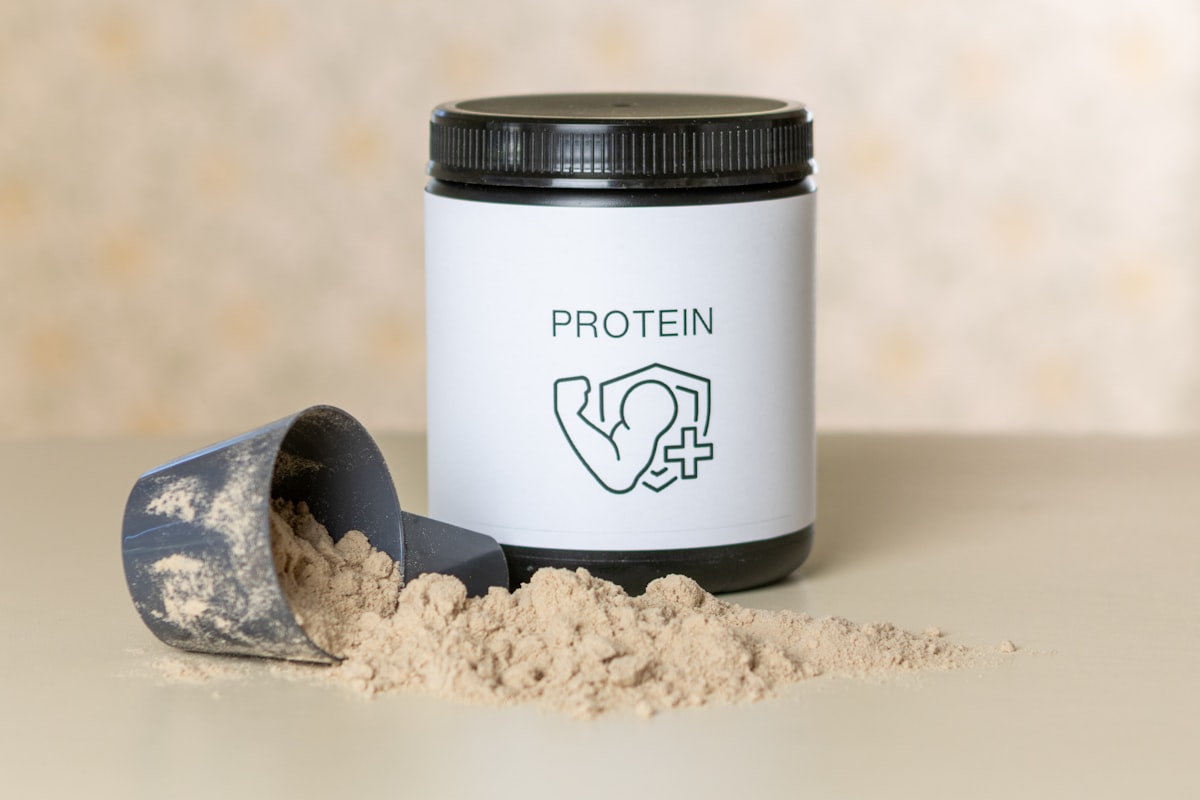
- There are reports on the possibility that taking protein may support physical vitality.
- The reliability of the research on vitality is high, but the research on fatigue is still limited.
- This is information for those interested in maintaining muscle mass and post-training recovery.
Protein is one of the important nutrients that make up the body. It functions as a component that forms muscle and tissue.
It is generally taken in the form of food or supplements, and is often discussed in the context of maintaining and supporting bodily function.
There are research reports on the possibility that taking protein may support physical vitality.
Many studies have investigated how protein is involved in supporting the energy and vigor needed for daily activity.
For example, multiple studies involving a total of 204 participants have shown a positive effect on vitality.
Specifically, in a 56-day study of 69 U.S. Army trainees, taking whey protein was reported to potentially improve push-up count and promote a reduction in body fat, compared with supplementing carbohydrate alone.
This study was conducted as a randomized controlled trial (a reliable research method in which participants are divided into groups to compare effects). In other words, nutritional intake during training may possibly support physical activity.
There is interesting data on maintaining muscle mass in older adults and on recovery after exercise.
Protein is drawing attention as a way to build the body with age and to cope with fatigue from training.
In a study of 123 Chinese older adults with low muscle mass, taking about 16 g of protein per day (roughly the amount in a few rice balls) over 6 months was shown to maintain muscle mass and physical function.
This study is based on a randomized controlled trial (a method in which participants are divided into groups to compare effects). In other words, this is a report that appropriate supplementation, regardless of the type of protein such as whey or soy, may help with ongoing maintenance.
The state immediately after training has also been studied.
In a very small-scale study of 12 adult men with training experience, taking protein after exercise was shown to potentially contribute to recovery of bodily metabolism and performance.
This study was conducted using a double-blind crossover design (an experiment designed so that participants cannot tell the difference, in which both conditions are tried at different times). In other words, nutritional intake after intense exercise may affect how quickly the body recovers.
It has been suggested that how fatigue is felt may differ depending on the type of protein and the timing of intake.
It should be noted that the same result is not obtained in every case.
For example, a systematic review (a method that gathers multiple past studies and analyzes their results together) of healthy young adults reports that soy and pea protein increase a subjective sense of recovery.
On the other hand, a study of 122 new recruits in the British Army found no change in physical performance or body composition from taking protein before bed.
This result comes from a randomized controlled trial (a method in which participants are divided into groups to compare effects). In other words, depending on the timing of intake, the expected change may not be obtained.
In addition, a 14-day study of 30 healthy adult men reported that an ingredient called butter bean hydrolysate may possibly contribute to muscle strength recovery and reduced fatigue.
However, such research on fatigue is still limited in number, and the reliability can be described as limited (a state in which the certainty of the information is not particularly high). For some people, no effect may be seen.
| Study | Design | Number of Participants | Duration | Main Result |
|---|---|---|---|---|
| Nutrients (2018, PMID:30200582) | Randomized controlled trial (RCT) | 69 | 56 days | A positive effect was reported |
| Nutrients (2017, PMID:28696380) | Randomized controlled trial (RCT) | 12 | 1 day | A positive effect was reported |
| Journal of the Academy of Nutrition and Dietetics (2021, PMID:33612439) | Randomized controlled trial (RCT) | 123 | 180 days | A positive effect was reported |
| Nutrients (2025, PMID:40806155) | Systematic review | Unknown | Unknown | A positive effect was reported |
| Frontiers in nutrition (2023, PMID:38144428) | Randomized controlled trial (RCT) | 122 | 84 days | No clear association was found |
| Nutrients (2023, PMID:36839344) | Randomized controlled trial (RCT) | 30 | 14 days | A positive effect was reported |
Research has been conducted on 69 U.S. Army trainees (male), 12 adult men with training experience, 123 Chinese older adults with low muscle mass, healthy young adults, 122 British Army new recruits (99 men, 23 women), and 30 healthy adult men.
These studies target people in a variety of physical conditions, such as soldiers in training, adults who exercise, and older adults with low muscle mass. This can serve as a reference for checking whether your own situation corresponds to one of these.
The report on vitality is based on 3 randomized controlled trials (RCTs).
Regarding fatigue, on the other hand, a total of 3 studies have been reported, but 1 of these is a systematic review, and the reliability is limited.
It should also be noted that the age group, physical condition, and study design of the participants vary widely.
Does taking protein affect vitality?
There is research reporting that taking protein has a positive effect on vitality. This result is based on 3 studies, and is described as highly reliable.
Is protein also related to fatigue?
There is research reporting that protein has a positive effect on fatigue. Some studies suggest an effect on subjective recovery from soy and pea protein.
Who has been studied in protein research?
This includes U.S. Army trainees, men with training experience, and Chinese older adults with low muscle mass. There is also research conducted on British Army new recruits.
Multiple studies suggest that protein may support vitality and help maintain muscle mass. On the other hand, regarding its effect on fatigue and optimal timing, the number of studies is still small and this cannot be described as certain. This content is based on a subset of the research, so please consider it in light of your own condition. Let's check where you stand now with the self-check diagnostic.